
Un framework di strategia e governance del cyber risk fornisce la struttura per difendere gli asset digitali di un'organizzazione. La strategia è il piano a lungo termine che collega le attività di sicurezza agli obiettivi di business. La governance è il sistema di policy, ruoli e processi che garantisce l'attuazione della strategia e il mantenimento della responsabilità.
Comprendere i principi fondamentali
Un errore comune è considerare la strategia e la governance del cyber risk come un unico esercizio di conformità. Sono due discipline distinte ma interconnesse.
La strategia definisce il 'perché'—il risultato desiderato. La governance fornisce il 'come'—il sistema di controlli e responsabilità per raggiungere quel risultato.
Senza una strategia chiara, le attività di governance mancano di uno scopo. Senza governance, una strategia rimane un piano astratto senza alcun meccanismo di esecuzione o verifica. Questa distinzione è fondamentale per CISO e IT manager. Le attività operative quotidiane, come applicare patch ai server o configurare i firewall, sono operazioni di sicurezza, non strategia. La strategia implica decisioni di livello superiore, come identificare gli asset più critici dell'organizzazione e definire il livello di rischio che l'azienda è disposta ad accettare.
Strategia: il 'perché'
La strategia risponde alle domande fondamentali sull'approccio alla cybersecurity. Collega gli obiettivi tecnici di sicurezza ai risultati di business, assicurando che le risorse siano indirizzate a proteggere gli asset critici per la missione dell'organizzazione.
Una strategia funzionale non è un elenco di strumenti di sicurezza. È un piano deliberato che affronta:
- Obiettivi di business: In che modo la sicurezza supporterà la crescita e l'innovazione aziendale anziché ostacolarle?
- Risk appetite: Quale livello e tipo di rischio il consiglio di amministrazione e il senior management sono disposti ad accettare per raggiungere gli obiettivi strategici?
- Scenario di minaccia: Quali sono le minacce credibili per l'organizzazione e per il suo settore?
Governance: il 'come'
La governance traduce la strategia in un sistema strutturato e auditabile. È una disciplina ingegneristica focalizzata sul creare chiarezza, assegnare responsabilità e produrre evidenze verificabili.
Una governance efficace non consiste nel raggiungere un punteggio di audit perfetto; consiste nel costruire un sistema difendibile che operi in modo prevedibile. Per uno sguardo più approfondito, puoi scoprire di più su come questo si collega all'enterprise risk management.
La governance fornisce il framework per la responsabilità. Garantisce che, quando un controllo viene implementato, esista una registrazione chiara di chi ne è responsabile nell'operatività, di come viene misurata la sua efficacia e di quale evidenza confermi che stia funzionando come progettato.
Questo sistema fornisce la struttura necessaria per la resilienza operativa. Stabilisce policy, definisce ruoli e responsabilità e implementa meccanismi di reporting che consentono alla leadership di supervisionare il rischio senza essere travolta dai dettagli tecnici.
Per chiarire questa distinzione, la seguente tabella fornisce una panoramica.
Strategia vs. Governance: differenze chiave
| Aspetto | Strategia di Cyber Risk | Governance del Cyber Risk |
|---|---|---|
| Scopo | Definisce la visione e la direzione di sicurezza a lungo termine dell'organizzazione. | Implementa la strategia attraverso un sistema di regole e responsabilità. |
| Focus | Perché specifici asset sono protetti e quali sono gli obiettivi. | Come le attività di sicurezza vengono eseguite, misurate e rendicontate. |
| Orizzonte temporale | Lungo termine (3-5 anni), con revisioni periodiche. | Continuo, operativo e ciclico (ad es. revisioni annuali). |
| Domanda chiave | "Stiamo facendo le cose giuste?" | "Stiamo facendo bene le cose?" |
| Output | Un piano basato sul rischio, allineato agli obiettivi di business. | Policy, standard, ruoli, metriche ed evidenze auditabili. |
| Ownership | C-suite, Consiglio di Amministrazione, CISO. | CISO, Comitato Rischi, Control Owner, Internal Audit. |
La strategia definisce la direzione, mentre la governance garantisce che l'organizzazione resti sulla rotta, operi correttamente e possa fornire evidenza dei propri processi. Entrambe sono indispensabili.
Costruire un framework di governance moderno
Una strategia funzionale di cyber risk è più di un documento; è un sistema chiaro e difendibile per gestire le operazioni di sicurezza. Non si tratta di produrre carta, ma di collegare direttamente gli obiettivi di business di alto livello del board ai controlli tecnici implementati sui sistemi. Il suo successo dipende da chiarezza, responsabilità e capacità di produrre evidenze verificabili.
L'intero framework è ancorato a un unico elemento critico: la dichiarazione di risk appetite.
Si tratta di una dichiarazione concisa del board che definisce la quantità e il tipo di rischio che l'organizzazione è disposta ad accettare. Traduce concetti astratti di tolleranza al rischio in confini concreti per il processo decisionale. Garantisce che ogni investimento in sicurezza e ogni scelta operativa siano allineati ai parametri definiti dalla leadership.
Questa dichiarazione è la direttiva di livello più alto da cui derivano tutte le altre componenti di governance. Fornisce a CISO e IT manager l'autorità per prendere decisioni basate sul rischio, con la certezza di operare entro limiti approvati.
Stabilire una chiara gerarchia di policy
Una volta definito il risk appetite, questo deve essere trasmesso verso il basso attraverso una gerarchia di policy strutturata. Ciò garantisce che ogni controllo abbia una chiara linea di tracciabilità fino a un requisito di business, eliminando pratiche arbitrarie.
Una gerarchia funzionale è strutturata come segue:
- Policy: Dichiarazioni generali di intenti che riflettono il risk appetite dell'organizzazione. Ad esempio, una policy potrebbe stabilire che tutti i dati sensibili dei clienti debbano essere cifrati.
- Standard: Regole obbligatorie che specificano come le policy verranno implementate. Uno standard imporrebbe l'uso della cifratura AES-256 per soddisfare il requisito della policy.
- Procedure: Istruzioni passo-passo per implementare uno standard. Una procedura dettaglia il processo esatto per configurare un database server specifico affinché utilizzi AES-256.
Questa struttura collega un'impostazione di configurazione tecnica fino a una decisione strategica a livello board.
Il diagramma seguente mostra come gli obiettivi di business informino la strategia, che viene poi eseguita attraverso questo modello di governance strutturato.
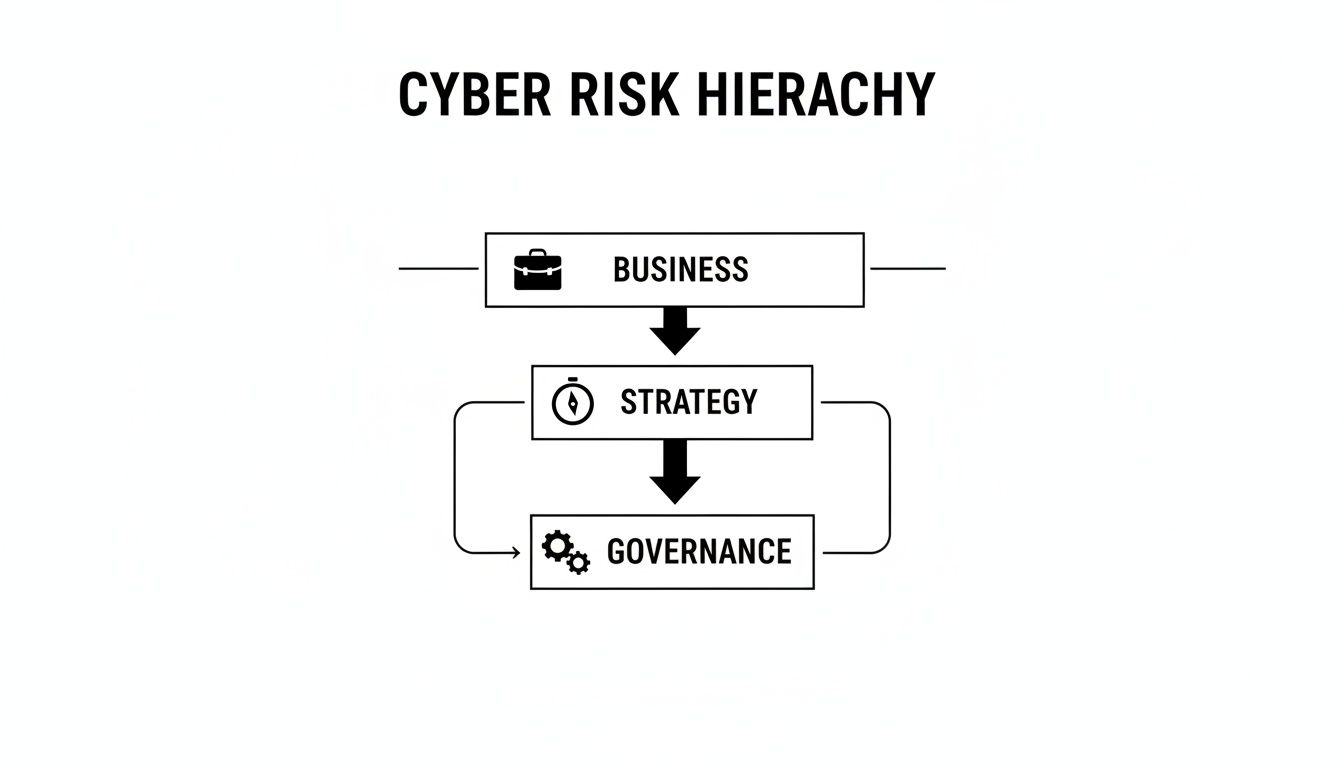
Questo illustra che la governance non è una funzione di conformità isolata, ma il motore operativo che trasforma la strategia in azione.
Assegnare una responsabilità inequivocabile
Policy efficaci richiedono una ownership chiara. Una Ownership Matrix—spesso implementata come matrice RACI (Responsible, Accountable, Consulted, Informed)—è uno strumento essenziale. Assegna responsabilità inequivocabili per ogni controllo, prevenendo la confusione e lo scaricabarile che spesso si verificano durante un incidente.
Per un controllo come "Quarterly User Access Reviews", la matrice specifica chi è Accountable per il suo completamento, chi è Responsible per eseguire il lavoro e chi deve essere mantenuto informato. Questo semplice atto trasforma la governance da concetto teorico a realtà operativa.
Le conseguenze del mancato stabilimento di una chiara responsabilità sono significative. L'IMF ha riportato che gli eventi estremi di perdita cyber sono quadruplicati dal 2017, raggiungendo circa $2.5 billion. Per le imprese più piccole, dove si verifica il 46% delle violazioni, la posta in gioco è ancora più alta. Sistemi che forniscono strumenti come TOTP 2FA e log immutabili non sono più opzionali; sono fondamentali per collegare le policy a controlli dimostrabili. Puoi consultare recenti statistiche e approfondimenti sulla cybersecurity per maggiore contesto.
Misurare ciò che conta con i Key Risk Indicators
Un framework di governance maturo è guidato dai dati. I Key Risk Indicators (KRI) sono metriche prospettiche che fungono da sistema di allerta precoce, aiutando i leader a identificare potenziali problemi prima che si trasformino in incidenti.
Un KRI non è una misura della performance ma un indicatore di rischio. Ad esempio, la "percentuale di server patchati entro 30 giorni" è un Key Performance Indicator (KPI). Il corrispondente KRI sarebbe la "percentuale di server critici con vulnerabilità non patchate più vecchie di 30 giorni".
KRI efficaci devono essere:
- Rilevanti: Direttamente collegati ai rischi definiti nella dichiarazione di risk appetite.
- Misurabili: Basati su dati affidabili e raccoglibili.
- Predittivi: Un indicatore di un potenziale problema futuro, non di un fallimento passato.
- Azioneabile: Il superamento di una soglia dovrebbe attivare una risposta predefinita.
Concentrarsi su un numero ridotto di KRI significativi offre alla leadership informazioni concise e utili per prendere decisioni e gestire proattivamente il rischio. Questo approccio trasforma il framework di governance da un insieme statico di regole in un sistema dinamico per costruire resilienza operativa, dimostrando che i controlli non solo sono implementati, ma anche efficaci.
Mappare la governance ai requisiti normativi
Un solido framework di governance interno è la base della resilienza operativa. Deve anche soddisfare le richieste normative esterne.
Normative come DORA, NIS2 e GDPR non dovrebbero essere trattate come sfide di conformità separate. Sono espressioni esterne degli stessi principi fondamentali—risk management, due care, integrità operativa—che un sistema di governance robusto dovrebbe già incarnare.
La chiave è passare dal considerare la conformità come una checklist separata per ciascuna normativa alla costruzione di un unico sistema centralizzato di controlli interni. Questo approccio elimina le ridondanze e stabilisce una singola fonte di verità per dimostrare la conformità su più framework.
Il principio del control mapping
Il control mapping è la pratica di collegare un singolo controllo interno, ben definito, ai molteplici requisiti normativi che contribuisce a soddisfare.
Ad esempio, un controllo interno come "Quarterly User Access Reviews for Critical Systems" è più di una best practice interna. È un'attività unica che fornisce evidenza diretta per diversi obblighi normativi:
- NIS2: Dimostra una misura concreta per proteggere sistemi di rete e informativi.
- DORA: Aiuta a soddisfare i requisiti relativi alle policy di access control ICT.
- ISO 27001: Si allinea a controlli come A.5.15 (Access Control) e A.8.2 (Privileged Access Rights).
- GDPR: Supporta il principio di minimizzazione dei dati assicurando che l'accesso ai dati personali sia limitato come richiesto.
Il controllo viene progettato una sola volta e mappato su ogni requisito applicabile. Ciò crea un sistema di conformità efficiente, scalabile e difendibile. L'obiettivo non è più inseguire singoli articoli normativi, ma rafforzare l'integrità del core delle operazioni.
Sviluppare una libreria centrale dei controlli
Una libreria centrale dei controlli è il fondamento di questo approccio. Non si tratta solo di un elenco di strumenti di sicurezza, ma di un catalogo curato dei processi specifici, delle configurazioni tecniche e delle azioni amministrative che l'organizzazione utilizza per gestire il rischio.
Ogni controllo nella libreria dovrebbe essere descritto in termini chiari e indipendenti dal framework. Deve definire l'obiettivo del controllo, il metodo di implementazione, il proprietario e l'evidenza che produce. Una volta definito, quel singolo controllo può essere collegato a qualsiasi numero di requisiti esterni.
Questa metodologia trasforma la conformità da attività reattiva, guidata dall'audit, a disciplina proattiva e basata sulle evidenze. L'obiettivo è un sistema in cui la conformità sia il risultato naturale e continuo di operazioni ben governate. Puoi saperne di più sulla produzione del giusto tipo di prova comprendendo cosa rende un demonstrable control under NIS2.
Un audit non dovrebbe essere un'ispezione che interrompe le operazioni. Dovrebbe essere una verifica di routine di un sistema progettato per essere continuamente verificabile. Una libreria centrale dei controlli con mapping chiari rende tutto ciò possibile.
Quando viene introdotta una nuova normativa, il processo non ricomincia da zero. Il compito diventa una gap analysis: analizzare i nuovi requisiti rispetto alla libreria esistente dei controlli, identificare eventuali lacune e creare o aggiornare i controlli necessari.
Questo processo metodico garantisce che il framework di governance rimanga resiliente e adattabile. Un audit non è più una prova di memoria o di preparazione last minute; diventa una validazione del design documentato del sistema e delle sue evidenze operative.
Implementare un modello di governance guidato dalla ownership
Un framework di governance documentato è un piano. Un sistema di governance operativo è una realtà. La transizione dal piano alla realtà dipende da un unico concetto: ownership.
Un modello guidato dalla ownership non consiste nell'assegnare colpe. Si tratta di costruire un sistema in cui la responsabilità guida esecuzione, misurazione e miglioramento. Senza una responsabilità chiara, anche le policy scritte meglio sono solo documenti; non controllano il comportamento dell'organizzazione.
Il processo di implementazione inizia dalle persone, non dalla tecnologia. Richiede il consenso dei responsabili di dipartimento, dei leader IT e dei manager delle unità di business, che devono comprendere e accettare il proprio ruolo in un modello di responsabilità condivisa per la sicurezza. La prima fase consiste nel costruire un consenso per un rollout graduale e gestibile.
Definire i ruoli con una Ownership Matrix
Il cuore di questo modello è la Ownership Matrix. È uno strumento pratico per assegnare la responsabilità, tipicamente implementato come matrice RACI (Responsible, Accountable, Consulted, Informed). Il suo valore principale è la chiarezza. Per ogni controllo, policy e processo, la matrice indica esattamente chi è assegnato a ciascun ruolo.
Questo atto di assegnazione elimina l'ambiguità e crea una mappa chiara delle responsabilità.
- Accountable: L'unico individuo con la responsabilità finale del completamento del task. Può esserci solo un 'A'.
- Responsible: La persona o il team che esegue il lavoro.
- Consulted: Gli esperti di materia che forniscono input prima di una decisione o azione.
- Informed: Le persone che vengono aggiornate sui progressi o sui risultati.
Questa struttura traduce principi astratti in responsabilità concrete. Per un processo come "Incident Response Testing", ogni partecipante conosce il proprio ruolo—dal CISO che è Accountable all'IT Manager che è Responsible per l'esecuzione del test.
Ecco un esempio semplificato di come questo si applica a un processo chiave di governance.
Esempio di Ownership Matrix per Incident Response
Questa tabella illustra come una matrice RACI assegna responsabilità chiare per 'Incident Response Testing' tra ruoli diversi, garantendo assenza di ambiguità.
| Task/Process | CISO | IT Manager | Compliance Officer | Business Unit Head |
|---|---|---|---|---|
| Plan and scope test scenarios | A | R | C | C |
| Execute technical testing | I | A/R | I | I |
| Document findings and gaps | I | R | A | C |
| Approve remediation plan | A | C | C | R |
| Report results to leadership | A | C | I | I |
Mappando le responsabilità in questo modo, si elimina il ricorso a supposizioni. La matrice diventa una singola fonte di verità per la ownership, rendendo la governance operativa anziché teorica.
Implementazione graduale e gap assessment
Tentare di implementare un intero framework di governance in una sola volta spesso genera resistenza. Un approccio graduale, che inizi con una gap assessment, è più efficace. Ciò implica confrontare i controlli e i processi attuali con lo stato target definito da policy e normative.
Una gap assessment è una diagnosi, non un audit. È progettata per identificare controlli mancanti, ownership poco chiara e processi deboli in modo costruttivo. Il risultato è una roadmap prioritizzata che indirizza i team a concentrarsi prima sulle aree più critiche, come la protezione dei dati sensibili o il rafforzamento delle infrastrutture critiche.
La necessità di questo approccio strutturato è evidente nell'attuale scenario di minaccia. I report indicano un aumento del 48% del ransomware, e le violazioni che coinvolgono dati cloud compaiono ora nel 82% degli incidenti in alcuni studi. Per le organizzazioni soggette a normative come DORA, questi dati sottolineano la necessità di una governance solida dal punto di vista operativo. Per avere un quadro più completo, puoi esplorare le ultime statistiche e tendenze sul cyber risk.
Stabilire processi ripetibili
Con la ownership definita e le priorità stabilite, il passo finale è costruire processi ripetibili per raccogliere evidenze e produrre report. È questo che rende la governance sostenibile, trasformandola da una serie di progetti separati in una disciplina continua.
Una governance efficace si basa sulla ripetibilità sistemica. I processi per raccogliere evidenze, rivedere i controlli e riportare il rischio dovrebbero essere il più possibile prevedibili e automatizzati per ridurre l'errore umano e garantire coerenza.
Ciò comporta la progettazione di procedure chiare su come le evidenze vengono acquisite, archiviate e tracciate. Significa anche stabilire cadenze di reporting per pubblici diversi. I team tecnici potrebbero richiedere aggiornamenti settimanali sulle performance dei controlli, mentre il board necessita di un riepilogo trimestrale dei Key Risk Indicators (KRI) collegati al risk appetite dell'organizzazione.
Quando questi processi sono progettati sin dall'inizio, il sistema diventa intrinsecamente audit-ready. La produzione delle evidenze è un sottoprodotto naturale delle operazioni quotidiane. Quando si verifica un audit, la documentazione è già organizzata, tracciabile e disponibile. L'audit non è più un evento di disturbo, ma una verifica di routine di un sistema efficace e guidato dalla ownership.
Padroneggiare la gestione delle evidenze per essere pronti agli audit
Una strategia di cyber risk è robusta solo quanto le evidenze che ne dimostrano l'efficacia. La gestione delle evidenze non è un compito amministrativo; è una disciplina ingegneristica focalizzata sulla produzione di una registrazione verificabile e affidabile che i controlli stiano operando come progettato.
Senza evidenze credibili, le policy sono solo dichiarazioni di intenti e i controlli sono assunzioni non verificate.
Le evidenze forti, pronte per l'audit, sono specifiche, tempestive e direttamente collegate a un controllo. Sono più di una semplice attestazione; sono un insieme di artefatti che dimostrano che un controllo funziona correttamente.
Definire evidenze solide
Non tutte le evidenze hanno la stessa qualità. Le evidenze più difendibili sono generate dal sistema e difficili da manomettere, fornendo un registro oggettivo anziché un'opinione.
Considera questi esempi di evidenze solide:
- Log generati dal sistema: Log non modificati di firewall, server o applicazioni che mostrano eventi specifici, come accessi utente o modifiche di configurazione.
- Screenshot di configurazione: Screenshot con timestamp delle interfacce di sistema che mostrano chiaramente un'impostazione di sicurezza richiesta, come la cifratura attivata.
- Documenti firmati: Policy, valutazioni del rischio o richieste di change firmate digitalmente o fisicamente, con una chiara cronologia delle versioni.
- Output degli strumenti: Report generati da vulnerability scanner o da sistemi Security Information and Event Management (SIEM).
L'integrità di queste evidenze è fondamentale. Sono necessari processi sistematici per mantenerne la credibilità, come il version control per i documenti e l'uso di sistemi che producono audit trail immutabili e append-only. Ciò garantisce che l'evidenza presentata a un auditor sia la stessa raccolta quando il controllo è stato eseguito.
Raccolta sistematica delle evidenze
Una raccolta efficace delle evidenze non è una corsa reattiva prima di un audit; è un processo continuo e operativo integrato nel lavoro quotidiano dei control owner.
Questo richiede l'istituzione di procedure ripetibili per acquisire, archiviare e indicizzare le evidenze mentre i controlli vengono eseguiti. Quando una revisione trimestrale degli accessi è completata, il report approvato dovrebbe essere immediatamente caricato in un repository centrale e collegato direttamente al controllo di access review. Questo approccio sistematico crea una libreria continua di prove verificabili.
Puoi saperne di più su cosa costituisce una buona audit evidence e sulle sue applicazioni pratiche nella nostra guida dettagliata.
Un audit dovrebbe essere una verifica del sistema, non un'indagine. L'obiettivo è presentare un pacchetto curato e indicizzato di evidenze che consenta all'auditor di validare in modo efficiente che il tuo sistema di governance operi esattamente come documentato.
Questo approccio è particolarmente importante per le piccole e medie imprese (PMI). Dati recenti mostrano che le PMI sono il bersaglio in circa il 50% di tutti i cyberattacchi, e il 60% cessa l'attività entro sei mesi da una violazione significativa.
Con solo il 14% delle SMB che dichiara di sentirsi preparato a un attacco, esiste un gap di governance significativo. Per queste organizzazioni, le piattaforme che consentono la versioning delle evidenze e collegano direttamente le policy ai controlli sono essenziali per diventare audit-ready.
Preparare l'Audit Day Pack
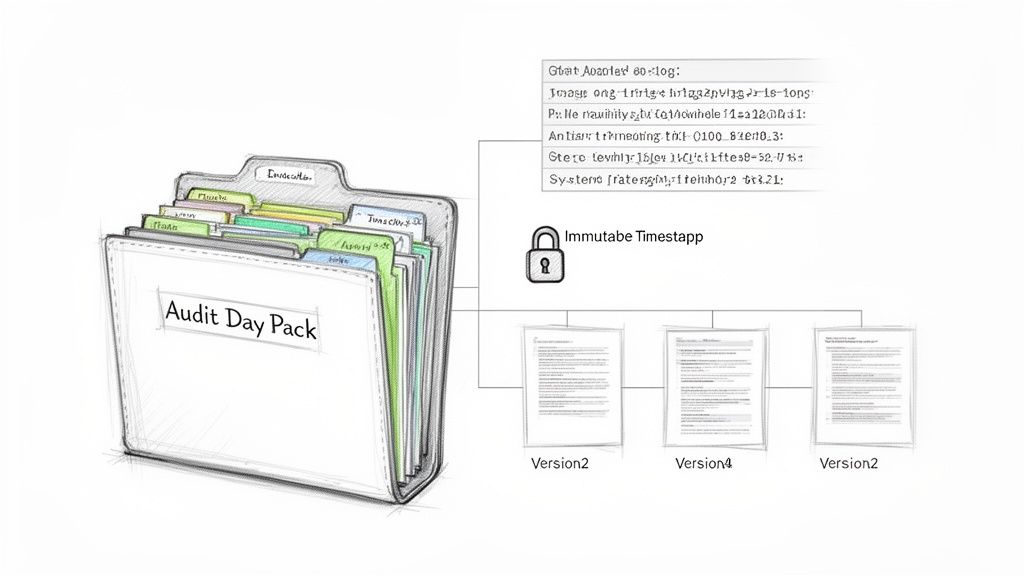
L'output finale della gestione sistematica delle evidenze è l''Audit Day Pack'. Non si tratta di una raccolta casuale di file, ma di un pacchetto di evidenze accuratamente curato e indicizzato, adattato allo specifico perimetro dell'audit.
Il pacchetto dovrebbe essere organizzato in modo logico—spesso per family di controlli o dominio normativo—rendendo facile la navigazione per l'auditor. Ogni elemento di evidenza dovrebbe essere chiaramente etichettato e collegato al controllo specifico che supporta.
Questo livello di preparazione dimostra un processo di governance maturo. Consente all'audit di procedere come una verifica fluida di un sistema organizzato, dimostrando che i controlli non solo sono ben progettati, ma operano in modo efficace, coerente e responsabile.
Mantenere la governance con il miglioramento continuo
Una strategia di cyber risk non è un progetto con una data di fine fissa. Un framework che non viene mantenuto continuamente diventerà inefficace man mano che gli obiettivi di business evolvono, la tecnologia avanza e emergono nuove minacce.
Una governance matura è progettata per adattarsi. Non è un documento statico ma un sistema vivo, integrato nel ritmo operativo dell'organizzazione, progettato per apprendere e migliorare nel tempo. Ciò richiede la creazione di cicli di feedback che trasformino i dati operativi in aggiustamenti strategici.
Integrare cicli di feedback per il perfezionamento
Il motore della governance sostenibile è il feedback loop. Il suo scopo è utilizzare gli insegnamenti derivati da test e verifiche reali per rafforzare il framework. Si tratta di un processo di miglioramento sistematico, non di assegnazione di colpe.
Gli input chiave per questo ciclo sono fonti preziose di intelligence:
- Incident Response Simulations: Gli esercizi tabletop e le prove tecniche sono esperimenti controllati. Testano policy, procedure e controlli sotto pressione in un ambiente sicuro, rivelando le debolezze prima che si verifichi un incidente reale.
- Periodic Gap Analyses: Man mano che cambia l'ambiente esterno, devono cambiare anche i controlli. Una gap analysis regolare confronta l'attuale postura di sicurezza con nuove normative o nuove informazioni sulle minacce emergenti, indicando dove la governance deve evolvere.
- Audit Findings: Gli audit interni ed esterni forniscono una valutazione oggettiva e di terza parte del sistema. I risultati dovrebbero essere considerati non come un voto, ma come un elenco prioritario di opportunità per migliorare i processi e rafforzare i controlli.
Un programma di governance maturo non si limita a raccogliere dati—li trasforma in intelligence. I risultati di una simulazione o di un audit non sono la fine di un processo. Sono l'inizio del ciclo successivo di miglioramento, garantendo che la strategia di cyber risk rimanga rilevante ed efficace.
Riportando questi insight in aggiornamenti di policy, miglioramenti dei controlli e formazione, l'organizzazione costruisce resilienza. Questo ciclo di miglioramento continuo è il segno distintivo di un programma di sicurezza ben gestito e difendibile.
Domande frequenti
Qual è la differenza tra Cyber Risk Management e Governance?
Il risk management è l'attività operativa di identificare le minacce, valutare le vulnerabilità e implementare i controlli. È la parte di sicurezza che consiste nel "fare".
La governance è il framework di supervisione che garantisce che queste attività siano svolte correttamente, siano allineate agli obiettivi di business e siano pienamente responsabilizzate. La governance chiede: "Stiamo gestendo i rischi giusti e possiamo dimostrarlo?" In sostanza, il management esegue il lavoro, mentre la governance garantisce che il lavoro sia fatto bene.
Come può un'azienda più piccola implementare una governance solida?
Per le aziende più piccole, l'obiettivo è la chiarezza, non la burocrazia.
Inizia dalle basi che offrono il maggior valore. Redigi una semplice dichiarazione di risk appetite che definisca i livelli di rischio accettabili. Crea un set fondamentale di policy per le operazioni più sensibili.
Usa una Ownership Matrix (ad es. RACI) per assegnare responsabilità chiare; questo crea accountability a costo minimo. Dai priorità alla raccolta delle evidenze per i sistemi critici anziché cercare di coprire tutto. L'obiettivo è un sistema snello, chiaro e difendibile che dimostri due care, non una complessa macchina amministrativa.
Con quale frequenza dovrebbe essere rivista una strategia di Cyber Risk?
Una strategia statica diventa rapidamente irrilevante.
La strategia complessiva di cyber risk richiede una revisione formale almeno annualmente. Questo è il minimo. Un evento significativo—come una fusione, una nuova normativa o un cambiamento importante nello scenario delle minacce—dovrebbe attivare una revisione ad hoc immediata.
Tuttavia, le componenti del framework di governance devono essere riviste più frequentemente. Le valutazioni del rischio e le metriche di efficacia dei controlli dovrebbero essere valutate su base trimestrale o semestrale. Questa cadenza fornisce alla leadership dati tempestivi per il processo decisionale e mantiene il framework rilevante dal punto di vista operativo, evitando che la governance diventi un esercizio annuale di spunta di caselle.