
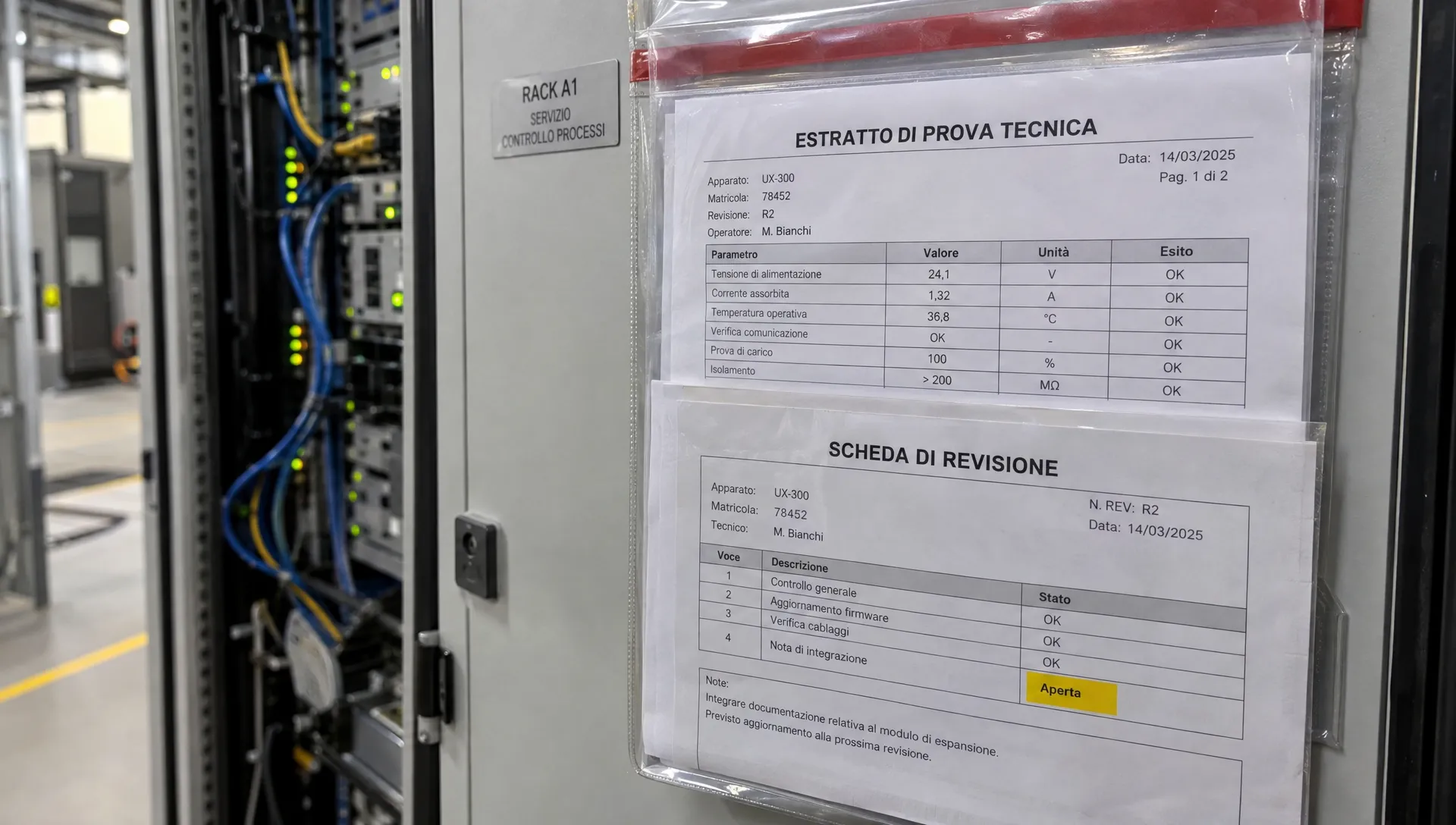
Selecting vendor management software for compliance is not only about storing supplier records or sending calendar reminders. The critical question for any audit is: can we prove what we asked, who responded, who validated the response, and how we handled any gaps?
This article focuses on gathering evidence, composing effective follow-ups, and keeping a verifiable remediation trail — not on procurement workflows or simple task tracking.
Different functions: master data vs. evidence trail
A supplier registry (master data) identifies the vendor, points of contact, and the services you buy. Evidence management must link each document to a specific request and a control, and it must preserve the reviewer’s decision.
These are complementary needs. CRM or enterprise platforms can manage relationships and operational work, but when you evaluate a vendor compliance tool you must specifically check versioning, responsibilities, acceptance criteria, and how decisions are reconstructed.
The goal is not to multiply tools, but to decide which system holds the auditable supplier file and what information flows to it. A closed task in your procurement list is not equivalent to a control marked as passed — that distinction must remain visible even when procurement, IT and compliance collaborate on the same supplier.
Design requests that produce verifiable evidence
Before you send a follow-up, create a verifiable request. A message such as “please send security documentation” leaves too much room for interpretation and shifts the burden onto the reviewer.
An effective request names the service, specifies the evidence expected, and defines the acceptance criteria. The level of detail should be proportionate to risk and to what the vendor can legitimately disclose.
Practical request fields to capture:
- Identifier: a stable code (for example EV-042) to reference in all communications.
- Scope: supplier, service and environment concerned.
- Control: the operational requirement you are verifying.
- Expected evidence: the document, extract or attestation with defined content.
- Acceptance criteria: conditions that make the evidence relevant and sufficient.
- Responsible parties: external contact, internal owner, and the reviewer.
- Due date and escalation path.
The internal owner is responsible for moving the request forward; the reviewer evaluates the evidence. In simple cases one person can play both roles, but responsibilities must be explicit.
Example: “Please provide an extract of the recovery test for the purchased service, including date, scope, outcome, and any open issues” is more verifiable than “please provide a continuity plan.” The first asks for evidence of execution; the second may only show that a plan exists.
Validate responses: presence is not sufficiency
Your vendor management tool must keep a distinction between “received” and “verified.” An authentic document can still be insufficient for the control.
A reviewer should assess relevance to the service, timeframe, provenance and content. For every outcome, record a rationale that is understandable to someone who did not participate in the exchange.
Common scenarios:
- Certificate of a management system: check scope, validity period and link to the service. Accept for the relevant control, or request additional evidence.
- Completed questionnaire: verify answers, owner and supporting evidence. Accept or follow up with checks.
- Test extract: check date, service, outcome and anomalies. Accept or open a remediation.
A certification does not automatically replace other requested proof. Likewise, a vendor declaration should not be presented as proof of actual execution of a control.
If a document contains personal data, trade secrets, or unnecessary security details, request an extract or a redacted version and record what was removed and whether the omission limits your assessment.
For more on linking evidence to controls see our guide on audit evidence (/en/blog/evidence-for-audits). In the supplier file, the linkage should accompany the submitted evidence through to the final decision.
Targeted reminders: ask for what’s missing, not everything again
A generic reminder generates more exchanges but rarely resolves uncertainty. When a vendor has already replied, the follow-up should specify exactly what element is missing and why it prevents closure.
A good vendor management tool preserves context: original request, latest response, identified gap, and the next accountable person. Automation of messages should be evaluated separately from the tool’s traceability.
Example follow-up text you can adapt:
Subject: request EV-042 — missing details for recovery test extract
We received the document for the specified service. To complete verification we need the test date and the recovery result. An extract including these elements is sufficient; please omit customer data. Please provide the addition by the agreed date or propose an alternative deadline with justification.
This message acknowledges the vendor’s reply, limits the new request, and clearly explains the obstacle to closure.
Escalation and decisive ownership
Define a simple escalation: first contact the supplier representative, then the relationship owner, then perform an internal risk assessment. This is not a one-size-fits-all requirement from law — define it based on criticality, contractual terms and internal procedures.
If evidence never arrives, document who must decide whether to leave the request open, accept compensating controls, or start remediation. The number of emails sent is not a substitute for a recorded decision.
Preserve version history and the verification sequence
Traceability should answer: which document was evaluated, by whom, when, and with what result? If a new version supersedes a previous one, the file must allow reconstruction of the review path.
Linking versions to decisions prevents presenting an auditor with a different attachment than the one actually approved. Record requested integrations and reasons for rejection, not just positive outcomes.
For follow-ups, distinguish sending from receipt. Don’t record “delivered” or “read” unless your channel provides reliable confirmation. Store provable facts: recipient, timestamp, message content and the associated response.
See our checklist on audit trails (/en/blog/audit-trail-best-practices) to decide which events you must make reconstructible. In supplier relationships, priority is preserving the sequence from request to decision without rebuilding the story from personal email accounts.
Map requests to applicable frameworks
The references below are meant to guide how you collect evidence, not to determine which rules apply to your organization. Applicability requires a case-by-case assessment.
- GDPR: Article 28 requires that processors provide sufficient guarantees and information to demonstrate compliance and to contribute to audits. Link requests to the processing activity and the managed service, and retain the relevant agreement and received information.
- NIS2: the directive includes supply chain security measures. For entities in scope, collect evidence relevant to supplier relationships, such as access controls or incident reporting procedures, documenting gaps and their handling.
- DORA: for financial entities, DORA’s provisions on third-party ICT risk management require you to connect evidence to the service and the function it supports — the same legal entity may deliver services with different criticality.
Collecting documentation supports ongoing monitoring but does not replace risk assessment, contractual commitments or other obligations.
Test the process during a product demo
When you evaluate vendor management software, run a realistic demo with non-sensitive materials. The most useful scenario is where the first vendor response is incomplete.
Ask the vendor to perform these steps:
- Create a request linked to a service, with an owner and acceptance criteria.
- Receive evidence from the external contact without exposing other suppliers’ materials.
- Record a gap and issue a targeted follow-up.
- Upload a revised version while preserving the prior version history.
- Link the outcome to remediation or close the verification with a rationale.
- Export the case file with evidence, responsibilities and decisions.
If you must search email threads to show which file was approved, the process is not yet audit-ready even if the interface looks tidy.
AuditReady centralizes evidence with ownership, versioning and an audit trail, and supports evidence collection from suppliers via controlled links. These capabilities help preserve received material and connect it to controls, findings and remediations, up to an audit export.
Separately validate automated reminders, escalation rules and delivery confirmations in the demo — do not assume they are present just because evidence handling exists.
FAQ
Q: Must vendor management software send automatic reminders?
A: Not necessarily. Automation reduces repetitive work, but the key requirement is a reconstructible record of request, messages, responses and decisions. If automation is needed, verify recipients, stop conditions and handling of incomplete replies in the demo.
Q: Is a completed questionnaire sufficient evidence?
A: It depends on the control and risk. A questionnaire records vendor assertions; some checks require corroborating evidence. Record which answers you accepted, which you investigated further, and why.
Q: What if a vendor refuses to share sensitive documents?
A: Define proportionate alternatives (redacted extracts, controlled on-site review). Document verification limits and submit the residual risk to an authorized decision-maker. Non-disclosure is not an automatic pass.
Q: When can I close a request?
A: When the reviewer has assessed the evidence and recorded the outcome. If gaps remain, distinguish administrative closure of the request from resolving the underlying issue or formally accepting the residual risk.
Validate a complete file before the audit
Bring an anonymized case to the demo: an initial incomplete response, a targeted reminder, and a revised evidence version. For supply-chain security scenarios, request an AuditReady demo for NIS2 (/auditready/lp/nis2) and verify you can reconstruct the full path from opening to export without external explanations.
This guidance is informational and not legal advice.
audit-ready evidence pack demo / not legal advice